It would seem that Dr. Augustus Jessopp’s reported sighting of a ghost in the library of Mannington Hall caused quite a stir amongst friends and family – so much so that he published a version of it in two contemporary literary papers three months after the sighting, in January 1880. This version appears somewhat ‘curated’ and post-dates his original statement of 19th November 1879.
The article became a public sensation, and both The Library Magazine, The Athenaeum and Dr. Jessopp himself were overwhelmed with correspondence from the curious and the critical.
The Norfolk Record Office holds many of these letters which are fascinating to read and give a detailed view of contemporary attitudes toward the supernatural, which differ little from today. The correspondents range from hardened sceptics to wholehearted believers; the one common thread being that they are particularly taken with the account, coming as it does from a clergyman.
The tale became internationally known, as exemplified by a letter written to Jessopp by a governess, Mary A. Sperling from Nice, France dated January 1880. She lays out various questions that her young charges would like to pose to Jessopp following much discussion during their country walks. Remarkably these young minds have encapsulated the majority of queries raised in the entirety of the documented correspondence in just seven questions; one can clearly see that they have discussed the account at length:
1) We are curious to know – which books were you studying?
2) What did Lord Orford understand by the apparition?
3) Were you opposite a mirror when you saw it?
4) Did the servant really go to bed after your use of his services?
5) What did you eat for dinner?
6) Did you find in the morning that you had transcribed as much as you might have fairly expected in the time?
7) Did the ghost utter any sound or make any rustling?
Mary A. Sperling, Nice, 1880
Whether Dr Jessopp satisfied the curiosity of the youngsters – or indeed any of his correspondents – one does not know.
A Scientific Explanation?
A letter from a Lucy E. Haig of Stirling, dated 14th January 1880, reflects the growing interest in science during the Victorian era, and offers a theory based on logic:
“Perhaps your health was not good at that time and the whole thing was possibly an optical illusion produced by the persistent stooping of your head over your books – the effect of candlelight and the many shadows produced thereof.”
Lucy E. Haig, Stirling, 1880
She also gives us a flavour of forensic techniques of the day that were coming to the fore following the invention of the ophthalmoscope in 1850. The emerging science of ophthalmology was used in an effort to capture the image of Jack the Ripper, just nine years after Jessopp’s ghost encounter. It was thought that the last image seen before a person died was imprinted on the retina. Police took close range photographs of the eyes of his final victim, but to no avail.
Haig writes:
“Did the figure bear any resemblance to anyone whom you know, and might have lately seen, and whose appearance was, unconsciously, imprinted upon the retina, and some shadow thrown on or object being upon the table, assumed the form of that person?”
The Mystery is Revived
Going through the Norfolk Record Office archives, we find a second-hand account of the evening in question written 73 years later in 1952, entitled ‘The Mannington Ghost – The Explanation’
It was provided by Lt. Col Thomas Purdy, whose father Robert John Woods Purdy, was a guest at Lord Orford’s dinner party on the night of 10th October 1879, and in fact offers more than one ‘explanation.’ It seems that Woods Purdy was a detractor of Jessopp’s, and his son wished to record for posterity his father’s version of what happened that fateful evening. He told his son the following:
“When the guests were leaving the dining room…Lord Orford picked up a candlestick and held it up to a portrait of Henry Walpole and said’ “There Jessopp, there is your hero.”
Woods Purdy describes the portrait as bearing an uncanny resemblance to the vision later seen in the library by Dr Jessopp, whom he describes later lingering in the hall, ‘gazing at the portrait.’
Conflicting accounts suggest that at one point Dr. Jessopp himself told Lord Orford that he believed the ghost to be that of Henry Walpole (although he does not mention this in his own statements, perhaps as this would suggest a hypnogogic dream state, ruining the credibility of a ‘ghost’ sighting). This theory was dashed when it was revealed that there was no connection between the Henry Walpole of the portrait and Mannington Hall, and both Woods Purdy and Lord Orford decided that Jessopp had fallen asleep over his books and dreamt that he had seen the figure of Walpole he had been gazing at earlier.
A Spirit from a Bottle
A first-hand account was provided by George Davison, who was Lord Orford’s steward on the night of the dinner party. His theory focusses on the mysterious valet, mentioned several times in Part One. He recalled the servant as being a large Italian gentlemen, known only as ‘Carlo’, and stated that he was the only other male servant in the house that night other than himself.
Davison claimed that Carlo had a penchant for an alternative form of spirit and was in the habit of ‘taking a cup of brandy every night.’ He suggests that as the night drew in, the Italian valet did not go to bed as requested by Jessopp:
“After the guests had gone, Carlo had crept into the morning room in the hope of taking the brandy decanter out, and finding Dr. Jessopp asleep, went to the table and stretched out his hand to the decanter, but the Doctor woke up and Carlo retired.”
Once Jessopp had fallen asleep again, Carlo tried once more and “advanced to the table and tried to abstract the decanter, and again the Doctor woke up and this time tried to stab Carlo’s hand with his pen.”
The Doctor was by now wide awake, and the servant had to go to bed without his night cap.
Purdy emphatically states:
“Such was George Davison’s version of the ghost and I have no doubt that it was the true explanation.”
It seems that 173 years later, we are still no closer to solving the Mannington Hall mystery. Documents from the Norfolk Record Office provide us with primary and secondary conflicting accounts that suit both the believer and the sceptic. Was Dr. Jessopp’s apparition a dream-like vision of a portrait, an Italian valet prowling the house at night for a tot of brandy or a genuine phantom?
The debate continues to rage on a topic that may never reach a satisfactory conclusion. Let’s hope that in centuries to come we will be maintaining Victorian gothic traditions, taking delight in discussing the intriguing world of the supernatural around a roaring fire on a dark winter’s evening.
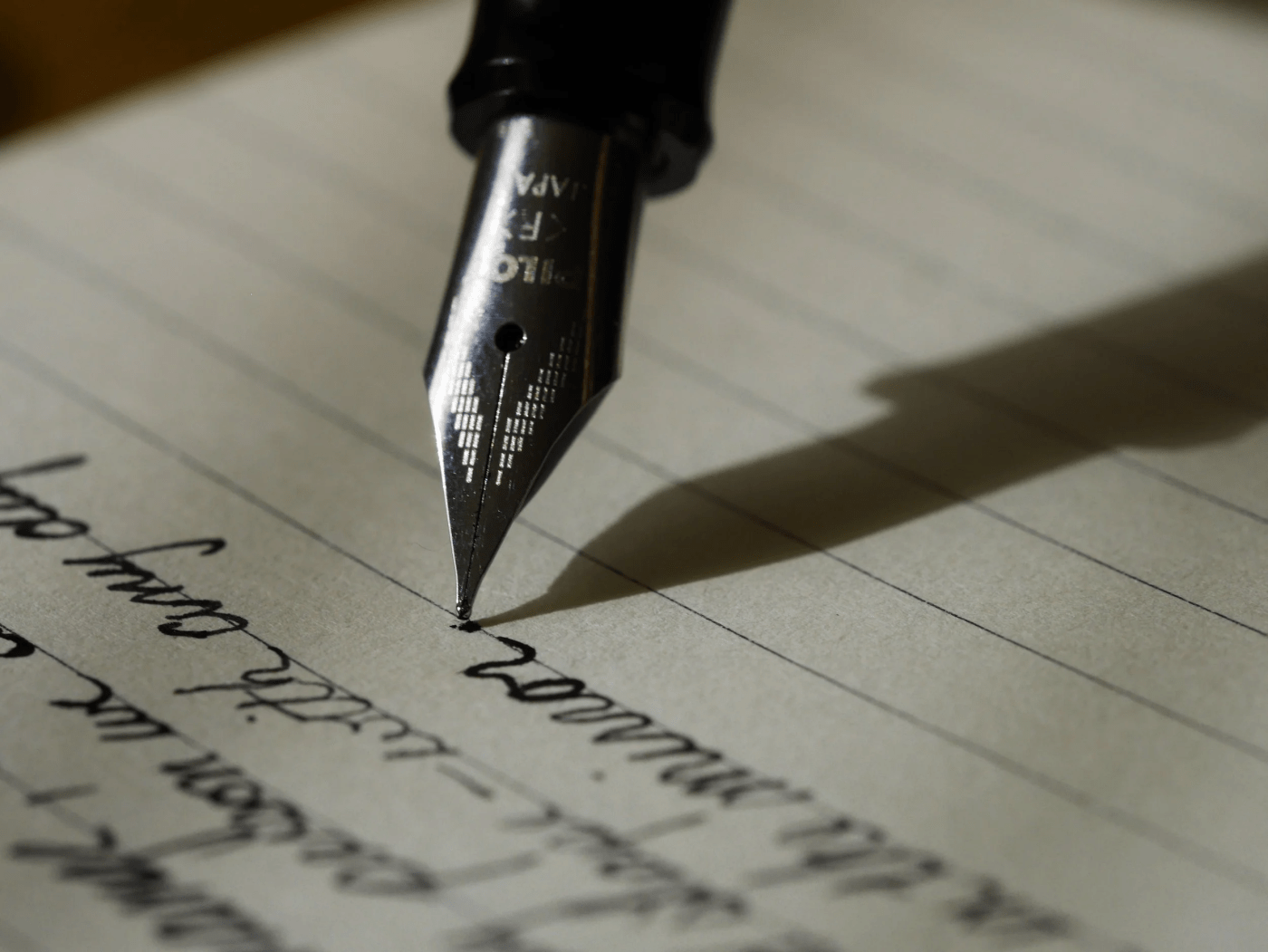
Image: James Laing, Beamish Museum, Durham
Article originally written for Norfolk Record Office blog. All documents cited in both Parts One and Two can be found at the Norfolk Record Office, Norwich.
 Lucy Spirit ~ Portfolio
Leave a comment