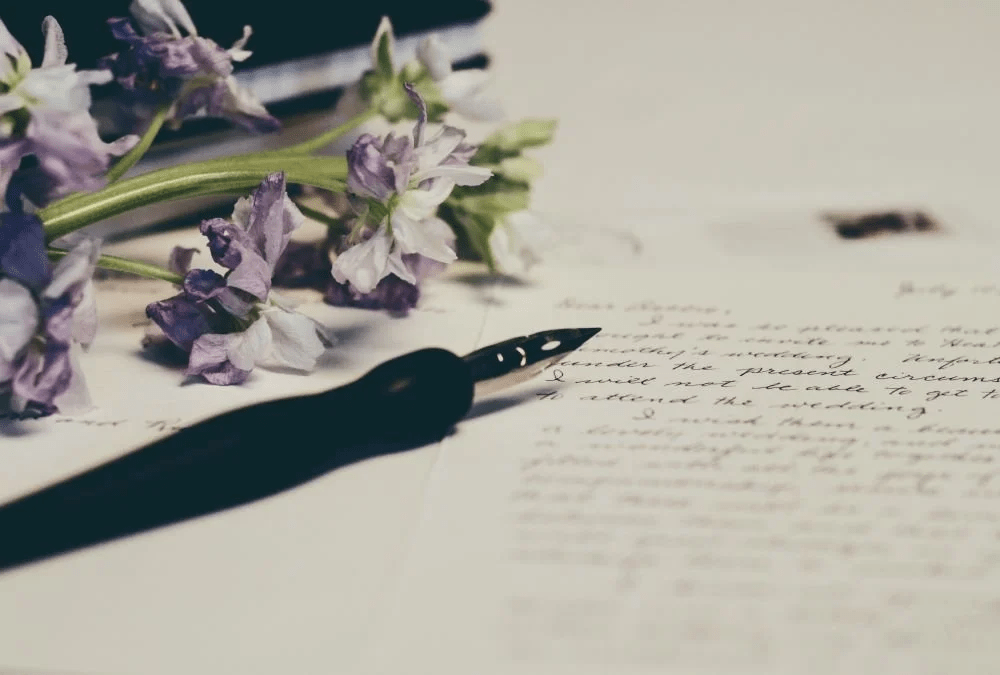
With the nights drawing in and a distinct chill in the autumnal air, our thoughts naturally turn towards all things ghoulish, ghostly and spectral. If you’re looking for a spine-chilling tale to tell by the fireside on a dark winter’s evening, look no further…
Our story begins in Victorian England, in a society that was brewing the perfect storm for the emergence of a national hunger for the supernatural. The tradition of the winter ghost story was gaining popularity, and gothic literature surged forth as anathema to the rigid social and religious structures of the day.
Many authors of the time favoured the topic of the supernatural, not least master ghost storyteller M.R. James (1862-1936), sill widely believed to be the finest author of this genre. It appears that James’ gothic fiction had a significant influence on his close companions and fellow society members – most notably Dr. Augustus Jessopp (1823-1914).
Jessopp made his name as a clergyman and headteacher in Norfolk in the latter half of the 19th century. Although ordained in the Christian church, he was not averse to the rise of the popular new religious movement of Spiritualism, despite its primary focus on exploring the afterlife.
It came to pass that in October 1879, the combination of a ghostly tale recounted by Jessopp, a trusted ‘man of the cloth’, and the nationwide thirst for all things beyond the grave caused quite a stir both within Norfolk and the wider world.
An Eerie Evening at Mannington Hall
Our tale unfolds at Mannington Hall in Norfolk. This medieval country house is the seat of the Walpole family and was home to the head of the family, Lord Orford. Orford had warmly invited Dr. Jessopp to attend a dinner party on 10 October 1879. Jessop was keen to attend, as he knew that Mannington Hall possessed an extensive library with a notable collection of rare books. Lord Orford had given prior permission for the clergyman to take notes on these unusual manuscripts during his visit.
As the guests arrived and gathered for dinner, a convivial atmosphere prevailed. The entire party were blissfully unaware that later that night, one of them would encounter a guest that had not been invited.
Jessopp’s description of the evening is detailed, as can be seen in a document from the Norfolk Record Office, namely a 20th century typed manuscript of an earlier 19th century statement made by Jessop himself:
“We dined at seven, our party numbered six persons. The conversation was generalised, and in no instance turned upon the supernatural, or anything connected with it. We broke up at half past ten. The main object of my going over to Mannington was to see and take notes upon some very rare books in Lord Orford’s library…I asked Lord Orford’s permission to sit up and make those transcripts.”
Revd. Augustus Jessopp, 1879
At this point we must take mental note of the valet; for he is at the very heart of a more modern and controversial interpretation of events which we will examine later – a turn of events that can again be found in the archives of the Norfolk Record Office, and is not reported widely.
Jessop continues:
“His Lordship at first wished me to allow his valet to sit up for me and see all the lights put out, but as this would have compelled me to go to bed earlier than I wished…I begged that the valet might go to bed, and promised to see all things safe before I retired and this was agreed to.
At eleven o’clock I was the only person in the house downstairs, and I was busily engaged reading and taking notes.”
Spirits both Earthly and Ethereal
He settled by the fire in the library, being as he was ‘a chilly person’. He describes selecting six books from the shelves, laying his chosen book upon the library table illuminated by four candles in sparkling silver candlesticks with the cheerful fire ‘burning brightly’. He states:
“I continued writing til nearly one o’clock…I rose and mixed myself some whisky and water and was beginning to feel that my work was drawing to a close, when as I was actually writing I saw a large white hand within six inches of my own…I paused in my writing, looked and saw a figure at my elbow within a foot of me. It was the figure of a somewhat large man, apparently examining the pile of books I had been making notes upon.
The man’s face was turned away from me. I saw his closely cut reddish hair, his ear and shaved cheek, with the eyebrows, the corner of his right eye, side of the forehead and somewhat high cheekbone.”
Seemingly unperturbed by the apparition, he describes the figure ‘dressed in ecclesiastical habit…up to the throat, and a stand-up collar rising to the chin.’ Closer examination of his hands revealed them to be ‘in perfect repose, the large blue veins of the right hand were conspicuous.’
Jessop now confirms in his mind that he was not dealing with a being of earthly realm,
“I looked at him for a moment, and was perfectly sure that this was not a reality.”
He recounts his complete composure, until the figure suddenly vanishes when he stretches out his hand. Within minutes, the ghostly visitor returned – but by this time Jessop had lost his nerve:
“I was framing a sentence to address him, when I discovered that I did not dare to speak. I was not afraid of the phantom but of the sound of my own voice.”
He finished ‘two or three words’ and closed his book – the sound of the volume dropping onto the table prompted the ghost to vanish once more. With courage and logic, Jessop ‘blew out the four candles and went to bed, and slept very soundly indeed.‘
This statement was originally written at The School House in Norwich just a month after his supernatural experience, on the 19th November 1879 and signed Augustus Jessop D.D. Interestingly, despite being a more modern typed copy of the original statement, it differs to the more widely known version published by Dr. Jessopp in The Library Magazine and The Athenaeum just two months later in January 1880.
One of the most notable differences between this earlier private document and the public statement is that the tot of “whisky and water” that Jessopp mixed for himself later becomes purely “seltzer water.” Further pages reveal what may have been Jessopp’s reasoning behind his revised statement; this will be examined in Part Two.
Image: Public Domain
Article originally written for the Norfolk Record Office blog. All documents cited in both Parts One and Two can be found at the Norfolk Record Office, Norwich.
 Lucy Spirit ~ Portfolio
Leave a comment